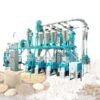
As my country’s grain processing industry continues to evolve, the wheat grain mill machine—serving as a vital piece of grain processing equipment—plays a crucial role in enhancing production efficiency and safeguarding food security.
The Evolution of the Wheat Grain Mill Machine
Traditional flour processing relied heavily on manual labor, resulting in relatively low production efficiency. With advancements in technology, modern wheat milling machines now incorporate advanced design concepts, enabling automated and intelligent production workflows. From early stone-grinding mills to today’s fully automated flour processing production lines, flour milling technology has undergone continuous improvement and upgrading.
Technical Features of Flour Milling Machinery
1. High Degree of Automation: Modern flour milling machines are equipped with intelligent control systems capable of automating the entire process—from raw material input to finished product packaging—thereby reducing labor costs and boosting production efficiency.
2. Superior Milling Precision: By utilizing advanced milling technologies, these machines ensure consistent flour quality, meeting the diverse requirements of various applications.
3. Energy Efficiency and Environmental Friendliness: Through optimized design, energy consumption is minimized, and dust emissions are reduced, ensuring compliance with current environmental protection standards.
Application Fields of Flour Milling Machinery
Flour milling machinery is widely utilized in flour mills, food processing enterprises, rural cooperatives, and similar entities. Businesses of varying scales can select the appropriate machine models based on their specific needs; suitable equipment is available for every requirement, ranging from small-scale household flour mills to large-scale industrial flour production lines.
Key Considerations When Purchasing Flour Milling Machinery
When selecting flour milling machinery, the following factors should be taken into account:
1. Production Capacity Requirements: Choose a capacity specification that aligns with actual production needs.
2. Equipment Quality: Select a supplier known for reliable product quality and comprehensive after-sales service.
3. Operational Convenience: Evaluate the ease of operation and the maintenance requirements associated with the equipment.
4. Energy Consumption Metrics: Pay close attention to the equipment’s energy consumption levels and opt for energy-efficient products.
Maintenance and Upkeep of Wheat Flour Milling Machinery
To ensure the proper functioning and extend the service life of flour milling machinery, diligent routine maintenance is essential. This involves regularly inspecting all components, promptly cleaning away residual flour particles, lubricating moving parts, and replacing worn-out components. Proper maintenance effectively minimizes equipment failure rates and ensures the continuity of production operations.
Industry Trends in Wheat Milling Machinery
Looking ahead, the wheat flour milling machinery industry is poised to continue its evolution toward greater intelligence, efficiency, and environmental sustainability. With the application of artificial intelligence and Internet of Things technologies, flour milling machinery will become increasingly intelligent, capable of enabling remote monitoring and fault diagnosis. Concurrently, new breakthroughs are anticipated in energy conservation and environmental protection, thereby supporting the sustainable development of the grain processing industry.
In summary, as a vital piece of equipment within the grain processing sector, flour milling machinery plays a significant role in fostering industrial growth and ensuring food security. Driven by continuous technological advancements, these machines will provide even greater support and enhanced services to the industry.