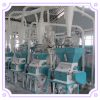
The wheat flour making machine industry is not only linked to agricultural planting and farmers’ income, but also to the staple food of countless households and the basic raw material for the food industry, making it a crucial link in my country’s food security. Therefore, wheat milling machinery is particularly important.
The most direct connection is the installation of the flour mill. Many people believe that installing flour milling machinery is simply a matter of following the blueprints, but this is not the case.

20ton wheat flour machine
The installation of flour milling machinery is very complex. From 20-ton wheat milling machines to complete sets of 200-500-ton equipment, every aspect needs to be considered during installation; it’s not as simple as just referring to blueprints. Improper installation and debugging of any part of the flour milling machinery can cause malfunctions.
What are the main aspects?
First, the process is complex, and there are numerous pipes. Modern flour milling technology emphasizes light milling and fine grinding, and enhanced grading. The pipes at the high-square sieve outlet of the flour mill are incredibly numerous, not to mention the many tees and hoppers. Not only are the pipes easily connected incorrectly, but spatial conflicts can also occur between the pipes.
Second. All piping in flour wheat mill machinery has specific installation angle requirements. Since raw materials, work-in-process, finished products, and by-products in flour mills each have their own inherent flow angles, the key to successful piping installation in flour milling machinery is ensuring smooth material flow; aesthetics are secondary.
The commercial wheat flour making machine industry, as a “ballast stone” for food security, relies on precise machinery installation and debugging, along with strict process control, for stable operation. Facing the demands of intelligent and green transformation, the industry needs to overcome technological barriers, build a collaborative innovation system integrating production, education, and research, and improve emergency response mechanisms to ensure it can still function as a “last line of defense” in extreme circumstances.