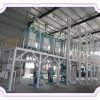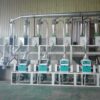
Maize, as a nutritious grain, plays a role in regulating human metabolism, boosting immune function, and enhancing resistance. A complete maize milling plant, as key equipment for producing corn flour and cornmeal, provides an important source of healthy food. In the rural economy, corn flour milling machinery plays a pivotal role. To achieve sustainable development and high returns, and to increase farmers’ income, it is essential to optimise, refine, and strengthen the flour milling machinery industry. This will ensure stable development in a highly competitive market and create more income for farmers.

The 20tpd fully automatic maize flour milling machine boasts a simple structural design, convenient processing and installation, compact size, low operating noise, and easy operation, avoiding problems such as excessive torque or flour clumping. The equipment consists of core components such as a feeding system and a traction-type clutch crushing system, integrating crushing, milling, and feed processing functions. It can flexibly process flour of different specifications and mesh sizes. At the same time, its low investment cost, high degree of automation, and small footprint provide great convenience for users.
In terms of application scope, the cost of a complete maize milling machine is widely used, not only in rural areas and small-scale grain and feed processing operations, but also in grain and oil markets, supermarkets, schools, government agencies, and canteens. This equipment can easily process various grains, boasts a high degree of automation, and utilises a full-process air-transport circulation processing technology, achieving automatic feeding, automatic grinding, automatic sieving, and automatic bagging. Only one person is needed to operate it, greatly improving production efficiency.
However, it is important to note that insufficient lubrication of the flour milling machine can lead to increased friction and higher equipment temperature. Therefore, proper lubrication and sealing measures are crucial to ensure the normal operation of the flour milling machine. Furthermore, strengthening equipment maintenance, especially regular inspection and maintenance of the bearings, can effectively extend the equipment’s service life, reduce operating costs, and achieve a win-win situation for both economy and efficiency.
For the flour milling machinery industry, standardising market order and improving overall management levels are crucial tasks. On the one hand, it is necessary to strengthen the review and evaluation of production facilities, production capacity, and equipment quality of manufacturing enterprises. Manufacturers that do not meet production standards should be rectified and eliminated to protect the legitimate rights and interests of legitimate manufacturers.
On the other hand, maize flour machinery manufacturers should actively promote research and development and innovation, guided by market demand, continuously improve production capacity and standards, and master effective quality management knowledge, thereby driving a steady improvement in product quality and enhancing market competitiveness.
Through the implementation of these measures, the maize flour milling machine industry will be able to better serve rural economic development, create more value for farmers, and promote the entire industry to a higher level.