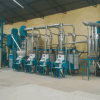
The flour yield of the wheat flour production milling machine is directly related to the economic benefits of a flour mill. This indicator directly impacts the company’s profitability and market competitiveness. Therefore, improving flour yield has become a core issue for every flour company.
I. Precisely Controlling the Moisture Content of Wheat Entering the Mill
The moisture content of wheat entering the mill is one of the key factors affecting the flour yield. Generally, the higher the moisture content of wheat, the higher the flour yield; conversely, too low a moisture content will lead to a decrease in flour yield. In actual production, companies should scientifically and rationally control the moisture content of wheat while ensuring that customer requirements for flour quality are met. Precisely adjusting the moisture content can both improve the flour yield and meet flour quality standards.
II. Scientifically Controlling the Soaking Time
Different types of wheat have different soaking time requirements. Based on the hardness and softness of wheat, it can be divided into soft wheat and hard wheat. The length of the soaking time is closely related to the processing performance of wheat. A suitable soaking time allows wheat to better adapt to processing requirements, thereby improving the flour yield. In actual operation, users should flexibly adjust the wheat soaking time according to the quality of the raw grain and factors such as ambient temperature and humidity to achieve the best processing results.
III. Standardize Equipment Operation Procedures. The professional skills and operational level of operators directly affect the performance of the wheat flour machine and the quality and yield of the flour. Skilled operators can fully grasp the characteristics of the equipment and accurately grasp the processing requirements of wheat, thereby improving equipment operating efficiency and flour yield.
Therefore, enterprises should strengthen the training of operators to ensure they are familiar with wheat milling machine operating procedures and master professional processing techniques. At the same time, a sound equipment operation management system should be established, and operations should be strictly carried out according to the procedures to avoid equipment failure or decreased flour yield due to improper operation.
Improving the flour yield of flour wheat milling machinery requires a multi-pronged approach. By precisely controlling the moisture content of the wheat entering the mill, scientifically managing the wheat soaking time, and standardizing equipment operation procedures, the flour yield can be improved, thereby enhancing the economic benefits and market competitiveness of the flour mill.