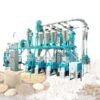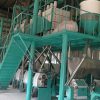
In today’s information-driven era, an increasing number of people are accustomed to using the internet to search for maize milling machines, gathering product information and making purchasing decisions online. As flour milling machines represent a significant capital investment with a long operational lifespan, making the right choice is directly linked to subsequent production efficiency and economic returns.
Therefore, after an initial review of product information online, we recommend that prospective buyers make every effort to visit the manufacturing facility in person for an on-site inspection. Some online vendors may possess only administrative offices and lack actual production workshops, technical teams, or a stable and reliable after-sales service system. An on-site visit allows you to gain a more intuitive understanding of the manufacturer’s production scale, equipment technology, and service capabilities, thereby laying a solid foundation for future cooperation.
Key Considerations When Choosing a Maize Flour Milling Machine Manufacturer
The maize flour meal machine is primarily used for the preliminary and deep processing of raw grains. The resulting finished products can be widely utilised across various sectors, including food processing, animal feed production, and industrial raw materials. Different industries have distinct requirements regarding parameters such as flour fineness, purity, and moisture content; therefore, the selection of equipment must be a comprehensive decision that takes into account your specific production goals and market positioning.
The long-term, stable operation of equipment relies heavily on systematic maintenance and upkeep. For processing machinery like flour mills, establishing good maintenance habits not only enhances operational efficiency but also, to a significant extent, extends the equipment’s service life and reduces the frequency of breakdowns. Routine maintenance activities should encompass every critical component of the equipment, establishing a standardized and consistent management protocol. (related articles:5-50dpd maize milling plant for sale)
In practical operations, strictly adhering to the equipment’s operating manual during maintenance is a fundamental prerequisite for ensuring smooth production flow. Basic maintenance steps—such as cleaning, lubrication, tightening, and adjustment—must be executed meticulously at every stage. Standardized operating procedures not only boost processing efficiency but also improve the quality of the finished product, rendering the entire production process more stable and reliable.
When maintaining maize processing machinery, particular attention must be paid to the transmission components. Parts such as bearings, belts, and gears are prone to wear or loosening during prolonged operation; regular inspections and timely interventions are essential to ensure the equipment functions correctly. Furthermore, the power supply system is a critical element of routine maintenance that must not be overlooked. A stable power supply and secure electrical connections constitute the foundational requirements for the equipment’s proper operation. Conducting periodic inspections of the power system—to promptly identify and resolve potential hazards—is of paramount importance for ensuring production safety.
Finally, the task of cleaning the equipment is an aspect that must not be neglected. In the context of flour processing, sanitary conditions directly impact the quality of the final product. Regularly sterilizing the interior of the equipment and key contact surfaces is a crucial measure for ensuring a clean processing environment and preventing cross-contamination. Only by thoroughly implementing cleaning and sterilization protocols can the quality and stability of the products produced by the complete set of equipment be effectively guaranteed. (related articles: complete maize flour mill production lines)
Parameters for Maize Flour Milling Machines of Various Capacities
| Item | Small Scale / Cottage Industry | Medium Scale / Commercial | Large Scale / Industrial |
| Capacity (24 hours) | 500 kg – 10 tons | 20 – 50 tons | 100 tons and above |
| Recommended Model | Single-unit machine (e.g., YTZF28-45) | Complete milling plant (e.g., 20–50 T/D) | Fully automatic production line (e.g., 100 T/D or larger) |
| Flour Fineness | 40–50 mesh (adjustable) | 40–80 mesh (multi-stage sieving) | Customizable to local standards (e.g., Ugali-specific flour) |
| Total Power | 22 kW – 30 kW | 100 kW – 200 kW | 300 kW – 600 kW+ |
| Voltage Requirement | 380V / 50Hz (three-phase) | 380V / 50Hz or customized | 380V / 50Hz (PLC-controlled) |
| Key Functions | Dehulling, grits making, milling (all-in-one) | Cleaning, degermination, milling, sifting, packaging | Fully automatic cleaning, grading, milling, weighing, packaging |
| Target Users | Rural households, small-scale entrepreneurs | Town flour mills, cooperatives | Large flour processing companies, government grain reserves |
| Typical Application | 500 kg/h unit; common in Nigerian rural markets | 50 T/D plant; widely used in Kenya, Zambia | 100 T/D or larger; operating in Mozambique, Ethiopia |
Installation Case In Africa
Posho mill for sale in Kenya

maize flour mill prices in Uganda

Corn mill machine in Tanzania

maize flour mill in Kenya

FAQ
What type of flour can this machine produce? Can it make Ugali / Nshima?
Answer: Yes. Our machine allows you to switch between different screen meshes to produce everything from fine flour to coarse meal. You can adjust the particle size to perfectly suit local staples such as Ugali, Nshima, Fufu, or Ogi / Akamu.
What if the power supply is unstable? Is the machine energy-intensive?
Answer: We understand that power fluctuations can be an issue in some regions. Our machines support custom voltage options (typically 380V, 50Hz) and can be configured to run with a diesel generator as backup power. Additionally, our equipment is designed with energy efficiency in mind to ensure stable operation even with voltage variations, minimising downtime.
Is the machine easy to operate and maintain? Do I need skilled technicians?
Answer: Operation is straightforward—usually, 1 to 2 workers can run the machine after basic training. Our machines feature user-friendly control panels. For maintenance, we provide instructional videos and manuals.
Do I need to soak or de-husk the maize before processing?
Answer: No. Modern integrated maize milling machines use a dry processing method. You simply feed dry, shelled maize kernels into the machine. The machine completes cleaning, debranning, germ removal, grits making, and flour milling in one continuous process, saving significant labour and time.
How do I achieve a bright white flour with high purity?
Answer: Our machines are equipped with a degerminator and polisher. These components effectively separate the bran and germ from the endosperm. Only the endosperm is milled, producing the super white maize meal that is highly preferred in many African markets. The separated bran and germ can also be sold as animal feed, creating an additional revenue stream.
Related Articles: Corn Grit Grinding Machine: A Comprehensive Overview—From Process to Value